
Concrete Floor Sainte-Foy: Preparing the Slab Before Epoxy
September 9, 2026 · 4 min read
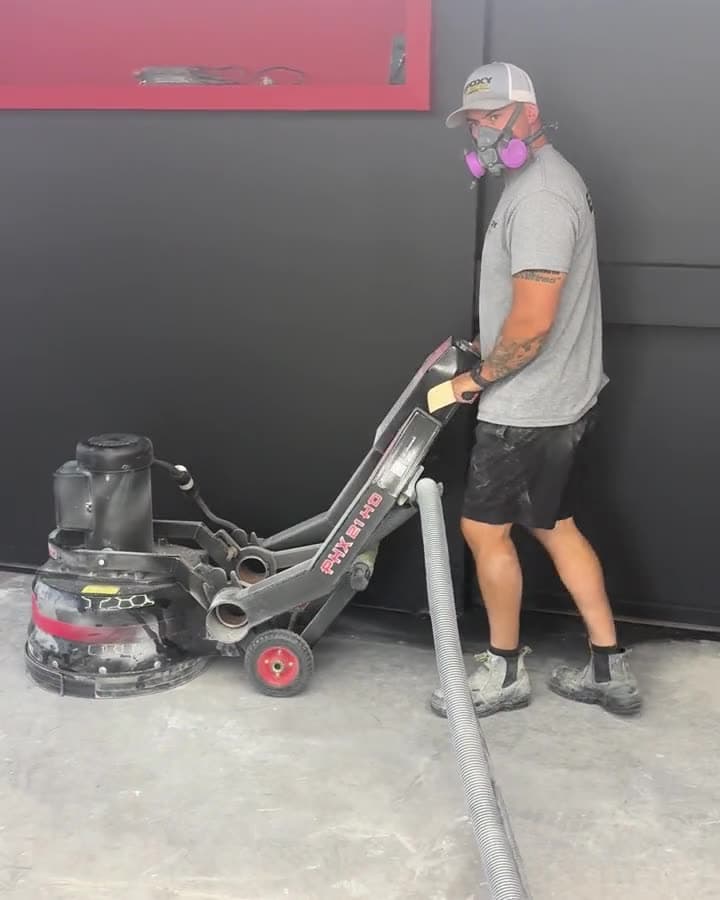
A concrete floor in Sainte-Foy needs to be clean, dry, and properly ground before it can take an epoxy coating. Whether it's a garage, basement, business, or workshop, the base has to be solid: full cure, moisture checked, cracks repaired, and the surface opened up with diamond grinding. Skip a step, and you're risking delamination down the road.
Why prep matters as much as the finish you choose
An epoxy floor is never stronger than the concrete underneath it. In Sainte-Foy, garage and basement slabs go through freeze-thaw cycles, road salt, and moisture rising up from the ground. If the concrete isn't in good shape at the time of installation, even the best finish (flakes, metallic, or quartz) will eventually lift or peel in the weaker spots.
That's why prep often takes longer than the application itself. A good crew doesn't just clean the surface, they inspect it, fix what needs fixing, and test it before starting anything.
The prep steps that need to be respected
Before applying an epoxy coating, here's what needs to be checked and done on the slab:
- Full inspection: concrete hardness, presence of cracks, crumbling areas, or old repairs.
- Moisture testing: too high a moisture level will prevent the epoxy from bonding properly, no matter how good the product is.
- Removing contaminants: oil, grease, paint, old sealer, or wax need to be stripped, otherwise adhesion is compromised right from the start.
- Diamond grinding: this step opens up the concrete's pores and removes the surface laitance, the weak layer that keeps epoxy from properly penetrating.
- Repairing cracks and holes: uneven concrete needs to be levelled before installation, otherwise the flaws end up showing through the finish.
At Époxy Québec Pro, all these steps are handled by the same crew, from grinding to the final polyaspartic coat, with no subcontracting. That avoids back-and-forth between different trades and keeps quality under control at every stage.
New concrete: why you need to wait before applying epoxy
Freshly poured concrete isn't ready for a coating right away. It needs enough curing time, usually around a month, before the internal moisture drops to a level that's acceptable for application. Installing epoxy too soon on new concrete traps moisture that will eventually try to escape, often showing up later as bubbling or delamination.
If you're pouring a new slab in Sainte-Foy or elsewhere in the Quebec City area, plan your epoxy project accordingly instead of trying to do everything at once.
Mistakes that cost you in the long run
Certain prep mistakes come up often, and they always end up showing:
- Applying epoxy without grinding, thinking a simple cleaning is enough.
- Ignoring an existing crack, hoping the coating will hide it.
- Not checking moisture levels, especially in a basement or garage without good ventilation.
- Installing over old sealer or paint that's already failing to bond to the concrete.
These shortcuts sometimes look fine for the first few months, but durability is what pays the price. A properly prepped floor, on the other hand, is built to last.
Garage, basement, business, or workshop: different needs
A residential garage is exposed to salt, oil, and the weight of vehicles. A basement needs to deal with moisture first, before even thinking about the finish. A business or workshop needs resistance to wear and sometimes to chemicals. In every case, concrete prep remains the first step, no matter the type of building or the finish chosen afterward.
That's also why an on-site evaluation, before giving a price, remains the best way to know exactly what your slab needs. The cost of a project varies depending on the current state of the concrete, the surface area to cover, the finish chosen, and the amount of prep required. To get an accurate estimate for your situation, request your quote rather than relying on a general average.
What sets proper prep apart
Good prep doesn't show once the epoxy is applied, it shows in the years that follow, when the floor holds up without cracking or peeling. At Époxy Québec Pro, every step, from diamond grinding to the polyaspartic finish, is carried out by the same crew, serving Quebec City, Lévis, Beauce, Beaupré, and Portneuf, with a 10-year warranty on the work performed.
If you have a slab in Sainte-Foy that needs to be assessed before an epoxy project, fill out a quote request so we can look at the state of the concrete before proposing a prep plan tailored to your needs.
Related reading:
Frequently asked questions
What's the price per square foot for a concrete slab in Quebec?
The price of a concrete slab depends on the thickness needed, site access, ground preparation, and region. This isn't a service Époxy Québec Pro offers directly, but if your slab already exists and you want epoxy on it, request a quote to find out what factors affect the cost of your project.
Where can I find concrete surfacing services in Quebec?
If you're looking for a specialist to treat the surface of an existing concrete floor in the Quebec City, Lévis, Beauce, Beaupré, or Portneuf area, Époxy Québec Pro handles full prep and epoxy installation on this type of surface. The best approach is to request a quote so we can assess the condition of your concrete first.
What's the average thickness of a reinforced concrete floor?
For a residential slab, thickness generally runs around 4 inches, while a commercial or industrial slab can be thicker depending on the expected load. This thickness doesn't change how the concrete is prepped before epoxy, but it does affect its overall strength. Époxy Québec Pro also offers commercial and industrial epoxy.
What's the price of concrete resurfacing?
The price of resurfacing depends on the current state of the concrete, the surface area, the level of repair needed, and the final finish chosen. No generic price can really reflect your situation, so the most reliable way to find out is to request a quote from Époxy Québec Pro after an on-site evaluation.
How long do you need to wait before applying epoxy on new concrete?
Freshly poured concrete needs enough curing time, often around a month, before its internal moisture level drops enough to receive epoxy. Applying too soon risks trapping moisture under the coating and causing adhesion problems down the road. Époxy Québec Pro offers, among other things, residential garage epoxy.
Areas mentioned in this article